

Blog #22 How much food do we need? (Blog 8 of 9 on Population)

The little information I give here is only to emphasize how we must not be complacent and realize we are little different from the unknown number of past human civilizations that have disappeared because of the overuse of the Earth’s capacity to provide. In fact, the only difference between us and all of them is we’ve had a lot longer to develop ways of not being confined by nature. But finite is finite and no amount of honing technology will allow us to exceed the limit of what the Earth can provide once it’s soils become morbidly unhealthy.
Here is a global recap:
Average Consumption per Year Per Person
686.2 Kilos
7.5 BILLION Peoples’ Yearly Consumption
5,146.5 TRILLION Kilos
8.5 BILLION Peoples’ Yearly Consumption
5,832.7 TRILLION Kilos
Increased Consumption of EXTRA 1 BILLION
6,862 BILLION Kilos
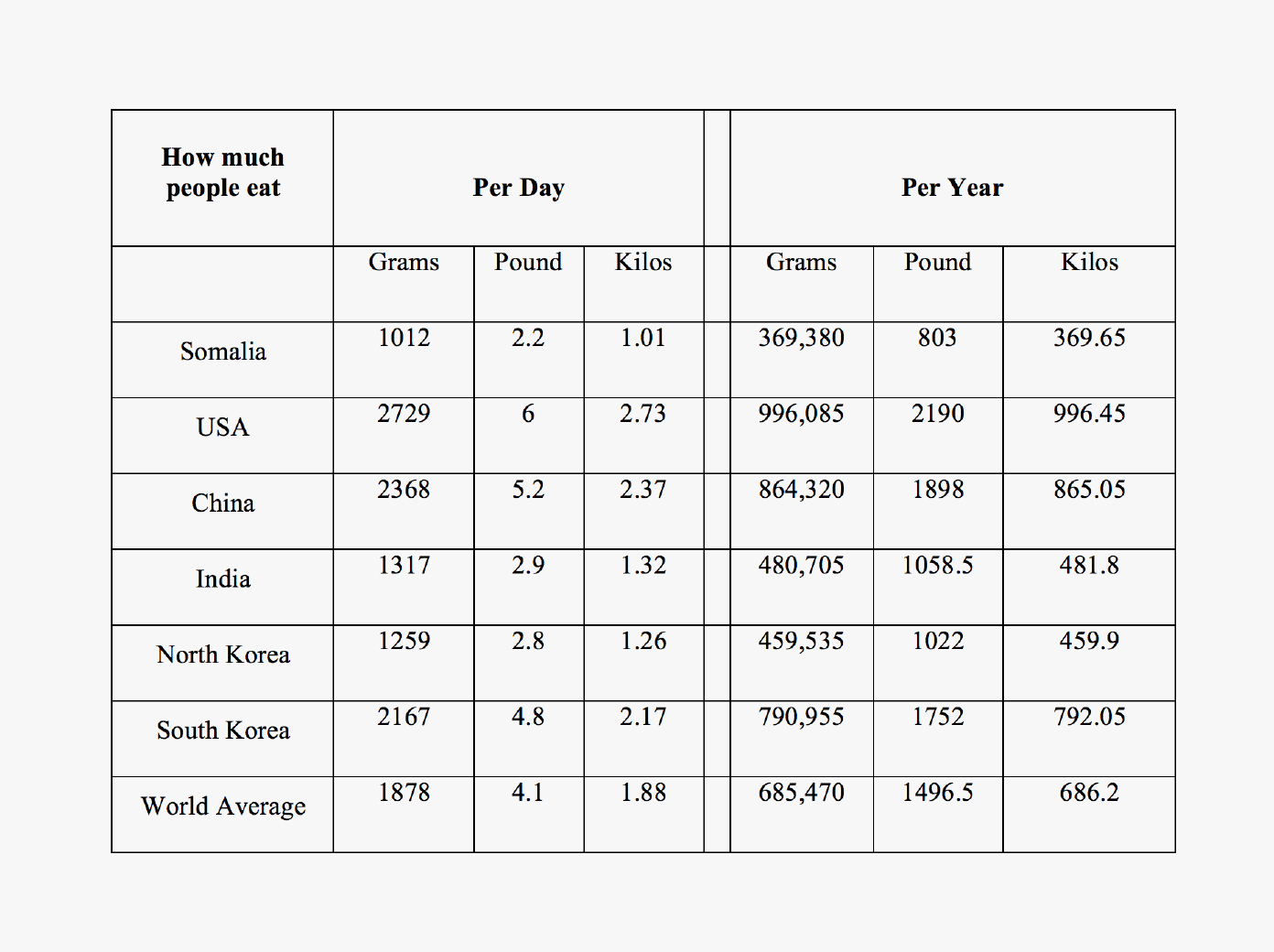
As you’re taking these numbers in, give a thought to what we discussed a few pages ago regarding how many humans we really need on the planet. Perhaps you can pick a population number that you think could allow our species to live in a healthy fashion in perpetuity and then multiply it by the existing average consumption number (682.5 Kilos). Big difference, eh?
And remember, the savings isn’t really just about food. It’s actually about saving the land needed to grow it, the number of animals and plants in the wild because we don’t need to steal their territory, as well as the micro-biological health and diversity in the land which keeps the planet healthy over the long run.


Latest Blogs
Blogs in Order
Blogs by Category
Join
Leave your comments...
0 Comments