
Blog # 16 Star Trek vs. Dystopia: (Blog 2 of 9 on Population)

As I write, the Covid pandemic variants have killed three million people officially, and probably hundreds of thousands which have not been reported, if not millions. Given that science’s best calculations (before Covid) shows that our population is going to only start reducing somewhere between 2050 and 2100, and that the economic banking system we’re in has so conditioned the majority of the world’s population to their purposes (including businesses and governments), I personally believe the odds of us having a major planetary-wide ecological collapse before we get down to a safe zone is well over fifty percent. Well over. That’s why I’m writing this blog. (Yeah, like it will really help.)
Let’s call this the Star Trek paradigm, and say that it is a positive and hopeful vision.
(at least the most hopeful we can expect)
Then there is the Post-Apocalyptic or Dystopian vision, where human kind falls back into a dark ages and much of the knowledge and positive common vision of how to build a long-term society is lost. Individuals once again have to do what they must, which is, obey what the strong, who take over, will them to do. And of course, without a technological or organizational infrastructure, it’s back to basics and a Mad Max future for everyone.
There is of course the third option, and that is humans coming to our senses and making the needed changes before some type of apocalypse occurs. Do I have hope this will happen? Not really. I must admit I believe our only hope is the Star Trek paradigm, where we rise from the ashes of a devastated society, where the levers of control of the economy are literally pried from the dead hands of those radical capitalists and oligarchs who’ve held on so stubbornly.
Of course, being the real world, and not science-fiction, there could be just a partial collapse… But wait a minute.
This last sentence about a partial collapse could only be made by a privileged person living in a country that would be among the last to feel any great pain from an ecological failure.
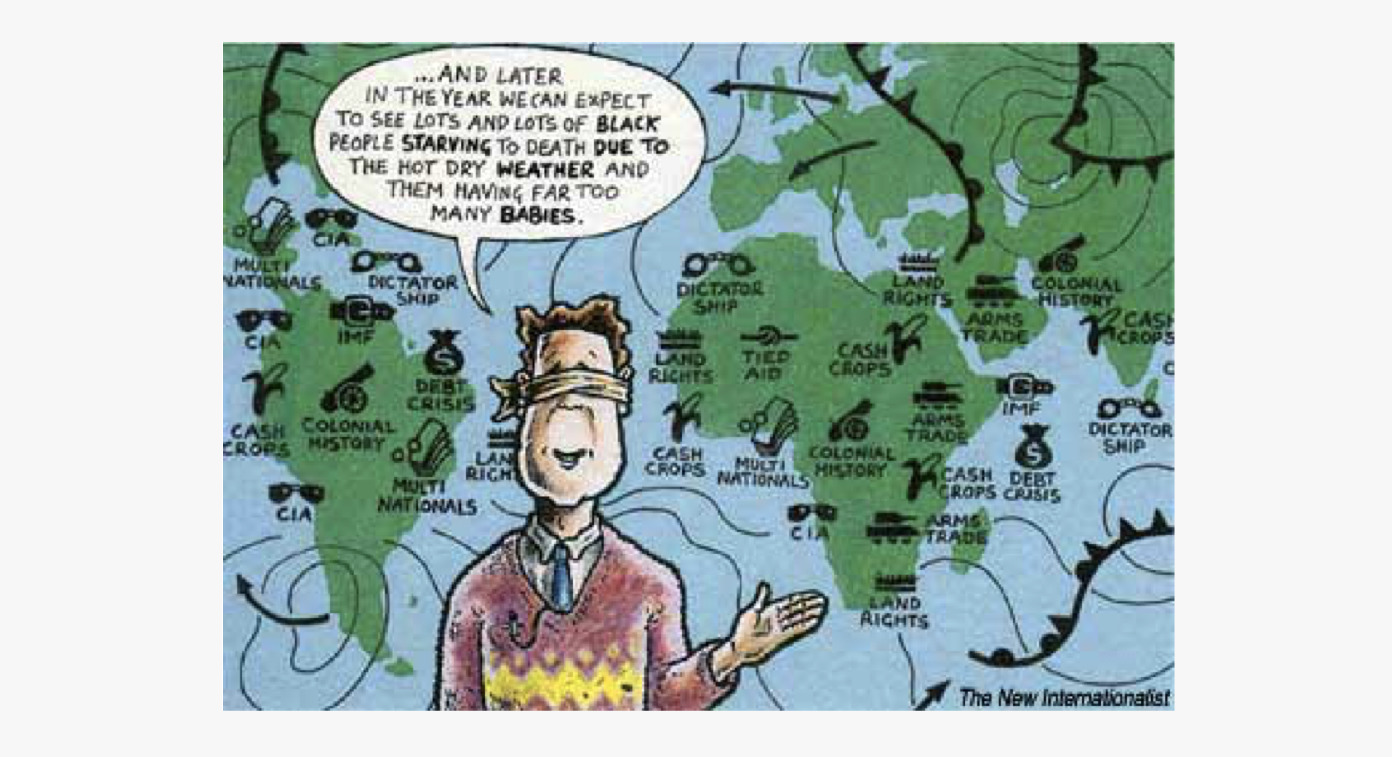
We must remember that while most famines have been averted in the last few decades, it’s because of the incredible good works by the people of many NGOs. Without their efforts, mass starvation would have been more catastrophic than it has been in many parts of Africa and the Middle East. Some might say these famines are partly caused by war, and they would be right. War does exacerbate famine. But war happens in these areas to a large extent because of the early stages of food insecurity. Old tribal rivalries are then used by those in power to cause conflicts which aid their centralizing of power, so as to profit themselves, family and tribe.
As I first typed the draft of this article in 2017; in southern Africa 16 million people were at risk in Lesotho, Madagascar, Malawi, Mozambique, Swaziland, Zambia and Zimbabwe. Over 7 million people were at risk in Cameroon, Chad, Niger, Nigeria and South Sudan.
But in spite of the help from well-meaning NGOs, migrations of hundreds of thousands of people from the countries of central Africa were (and still are) making their way illegally to Europe. But these figures and situations are 2016 information. And if all this was/is not bad enough, there are now reports from Libya of how people fleeing north from the famines in central Africa are being rounded up and being sold as SLAVES!
All this as we continue to enjoy our lattes in New York, Toronto, Zurich and Hong Kong. To those in the first world I would remind you of the title and theme of Frank Zappa’s ironic 1966 song, “It Can’t Happen Here,” and then think of how climate change is causing an increased new normal of extreme hurricanes, floods and fires in first world countries all over the globe… and the Covid Pandemic.
And this is just the beginning. As global warming continues over the next decades of the 21st century, weather patterns will change more drastically than they already are. Predictions are that deserts will continue to grow and negatively upset the bread basket areas of the world.
So, if I don’t think we can save the world, why do I do it? Why do I spend so much of my time reading and writing about this stuff if I truly believe that the highest likelihood for humanity is a limping collapse? I am reminded of a time I had occasion to meet Ralph Nader, who has long been an inspiration of mine.
During one brief conversation I asked him, “Through all the struggles, with the powers-that-be pushing back to reverse the changes you helped bring about, what keeps you going?”
“What else am I going to do?” he answered.
Oddly enough, whenever I feel dispirited, I remember those words and they somehow comfort me.
This brings it down to some simple truths that must be accepted, lest we burnout trying to help or go mad:
-We must understand that any change is going to take time, one and two generations just to get started. It’s not going to happen by next Tuesday.
-Understand that we, both as individuals and collectively, make up the only generation alive now to make the world a better place. Every decision people make today, negative and positive, has an effect on the future. And then, in turn, the next generation is the only one available to keep what we’ve started going, and to initiate more positive changes. It all comes down to individuals choosing to make a difference and reaching out to join like-minded people.
-Understand that any long-term formula we come up with will not work unless there are a great deal more natural resources than humans consuming them, so the natural world can find a new balance. Then we must acknowledge we have not been in balance for some time. How to get it back to the former condition? Create new resources? It doesn’t work that way. Lower our population? It truly is the only long-term option that works!


Latest Blogs
Blogs in Order
Blogs by Category
Join
Leave your comments...
0 Comments